



Tips for People with Diabetes
Many people with diabetes understand that physical activity can help manage blood glucose levels. However, they may be concerned about experiencing hypoglycaemia during exercise or may be unsure about which types of exercise are suitable for them. The following tips can help you exercise safely. If you have any concerns about your health or physical condition, please consult a healthcare professional before exercising.
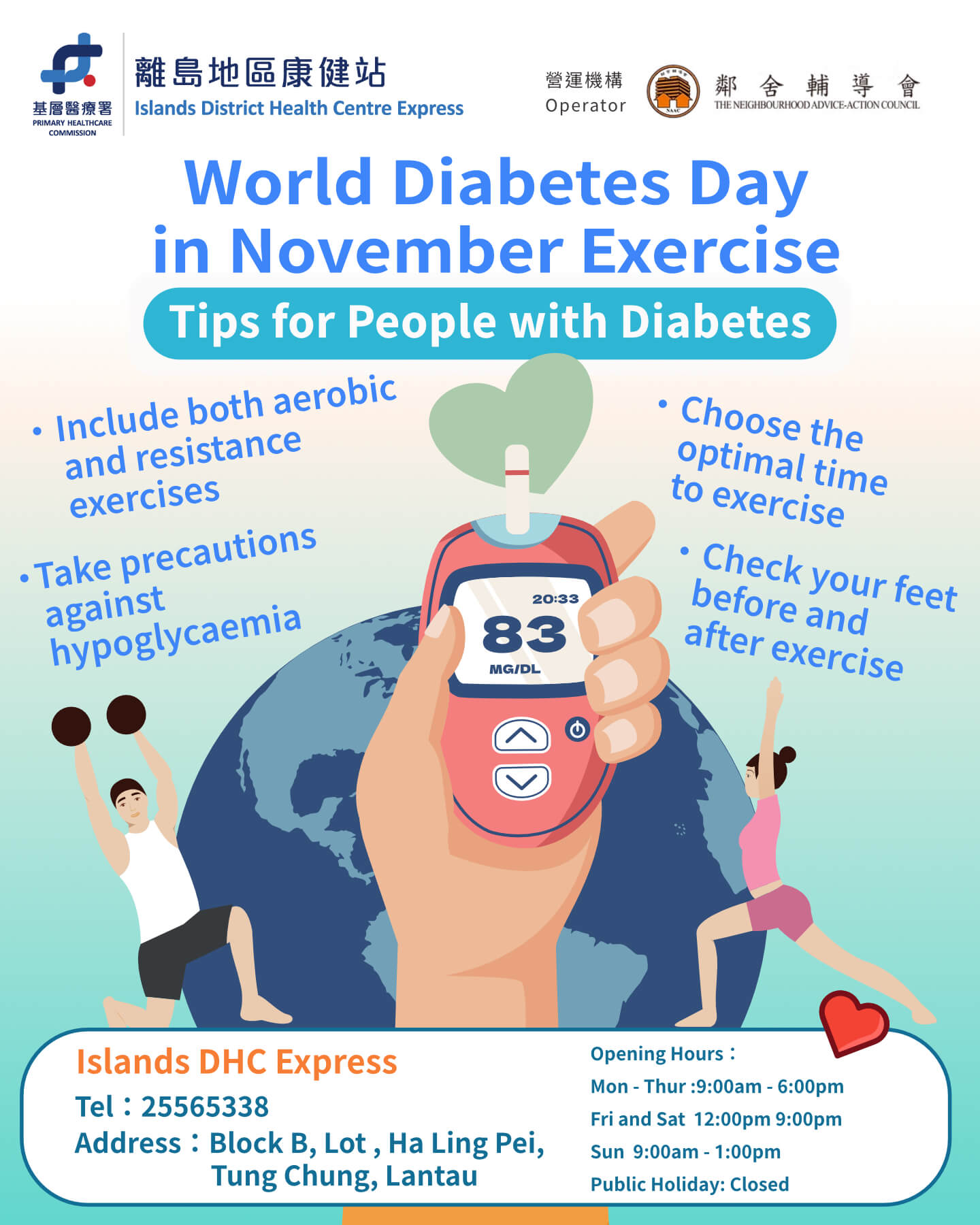
- Include both aerobic and resistance exercises:
Aerobic exercise: Engage in moderate-intensity aerobic exercise, such as brisk walking, tai chi or using a stationary bicycle, on at least five days per week, accumulating at least 150 minutes per week.
Resistance exercise: Use resistance bands or water bottles to strengthen your upper and lower limbs. Perform 10 exercises, repeating each exercise 8 to 12 times for 2 to 3 sets, on 2 to 3 days per week.
- Choose the optimal time to exercise:
Exercise is recommended 1 to 2 hours after a meal, when blood glucose levels are generally more stable. This can also help reduce the post-meal rise in blood glucose. Avoid exercising immediately before bedtime or when the effects of your medication or insulin are at their peak, as this may help reduce the risk of hypoglycaemia.
- Check your feet before and after exercise:
People with diabetes may develop peripheral neuropathy and have reduced sensitivity to pain caused by an injury. Always check both feet before and after exercise for redness, swelling, abrasions or blisters. Wear comfortable, well-fitting sports shoes and socks that provide adequate protection and support.
- Take precautions against hypoglycaemia:
Carry some sweets or a small carton of fruit juice with you when exercising. If you experience symptoms of hypoglycaemia during exercise, such as cold sweats, dizziness or trembling hands, stop exercising immediately and consume some fast-acting carbohydrates.
The Islands District Health Centre Express is committed to promoting district-based primary healthcare services. In support of the Government’s Chronic Disease Co-Care Scheme, eligible members of the public may undergo chronic disease risk screening through a District Health Centre or District Health Centre Express. Depending on their healthcare needs, participants may receive coordinated follow-up care from family doctors, nurses and allied health professionals. This supports the “Family Doctor for All” concept and enables personalised health management.
Featured Activities:
Islands DHC Express Activities Booklet (October-December 2026)
- Make the Most of Your Health Benefits: A Guide to Government-subsidised Screening Programmes (Page 24)
- Can Avoiding Sweets Prevent Diabetes? The Key to Blood Glucose Management Is Reducing Excess Body Fat! (Page 24)
- Diabetes Support Programme (Page 26)
- Prediabetes Support Programme (Page 26)
Reference: Centre for Health Protection, Department of Health
 World Mental Health Day in October
 »
»