

• Skip to main content
  • Skip to header right navigation
  • Skip to after header navigation
  • Skip to site footer
islanddhc
鄰舍輔導會 The Neighbourhood Advice-Action Council

離島地區康健站 Islands DHC Express

  • Font Size
  • 繁
  • 简
Font Size |
  • 繁
  • 简
| Facebook Instagram
  • Home
  • About Us
  • Services
    • Service Scopes
    • Service Flow
    • Service Charge
    • Service Faq
  • Member
  • Health Programme
    • News
    • Featured Activities
    • Event Calendar
  • NSP
    • Network Service Provider List
    • Be a Network Service Provider
  • Health Info
  • Community Resources
    • List of Service Providers
  • Contact Us
  • Join Us
    • Recruitment
    • Volunteer

IDDSI Soft Meal Guidelines

Dysphagia, or difficulty swallowing, is a common clinical complication among older adults and people with neurological conditions. If not properly managed, it can easily lead to malnutrition, dehydration and even potentially fatal aspiration pneumonia.

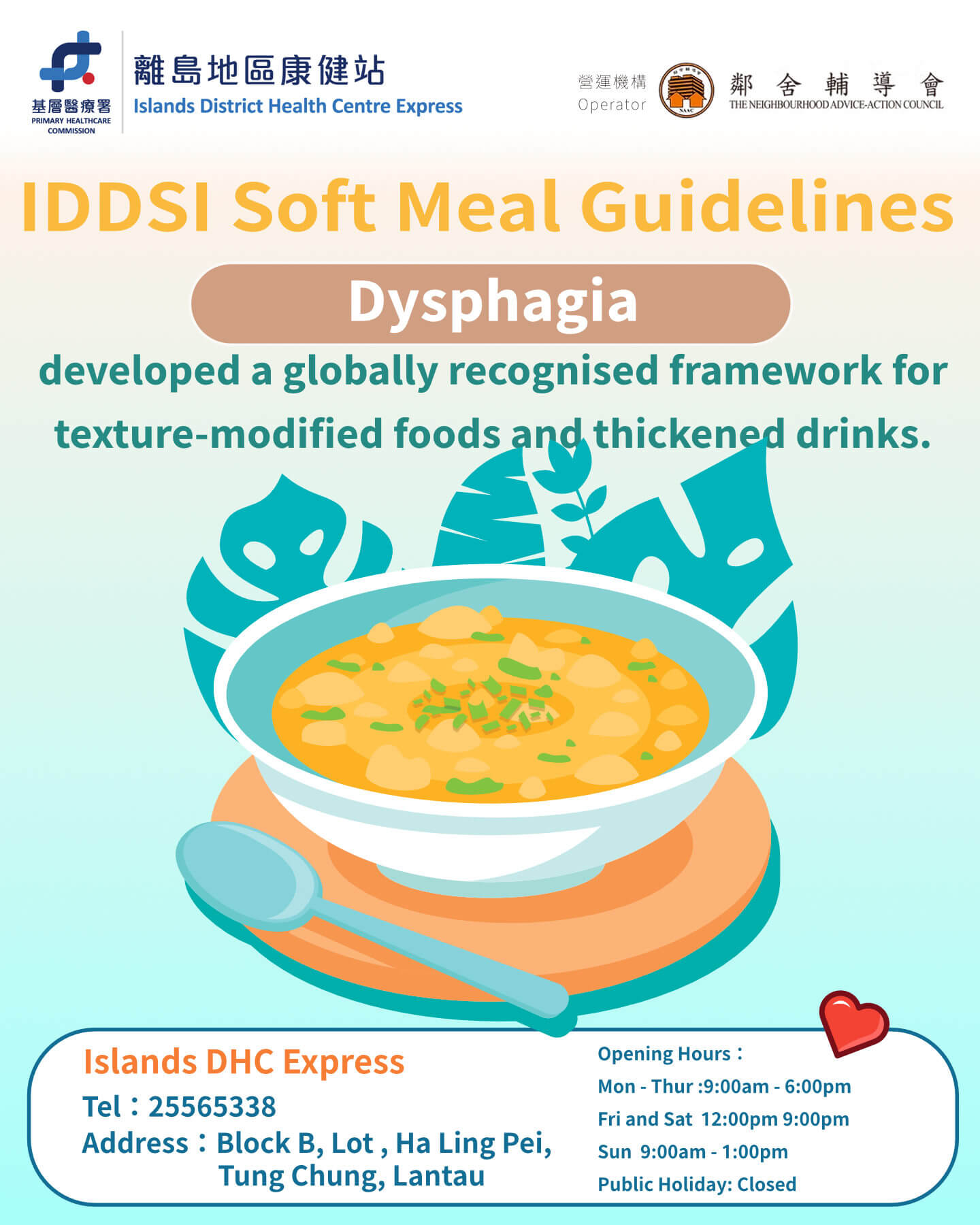
In the past, healthcare institutions lacked consistent texture standards for minced or puréed meals, creating significant risks during clinical handovers and meal preparation. To address this issue, the International Dysphagia Diet Standardisation Initiative (IDDSI) developed a globally recognised framework for texture-modified foods and thickened drinks.

The IDDSI Framework uses objective testing methods to classify foods and drinks accurately, helping ensure safe eating and drinking for people with dysphagia. It consists of eight levels, ranging from Level 0 to Level 7. Drinks are classified from Level 0 Thin to Level 4 Extremely Thick, while foods are classified from Level 3 Liquidised and Level 4 Puréed, through Level 5 Minced & Moist and Level 6 Soft & Bite-Sized, to Level 7 Regular.

The IDDSI Framework replaces subjective descriptions with simple, standardised testing methods. These include the IDDSI Flow Test, which uses a 10 mL syringe, as well as the Fork Pressure Test and Fork Drip Test, which help determine whether a food or drink meets the requirements of a specific IDDSI level.

A swallowing assessment conducted by a speech therapist, together with an IDDSI-level diet recommended by a dietitian, can help prevent food or liquid from entering the airway and significantly improve mealtime safety.

Modern soft-meal preparation techniques can reshape puréed food to resemble its original appearance. This not only ensures a safe and appropriate texture, but also helps stimulate appetite and preserve the dignity and enjoyment of eating.


References:

Department of Health Edlerly Health Service, HKSAR

International Dysphagia Diet Standardisation Initiative
IDDSI Soft Meal Guidelines
Previous Post: « 10.20 World Osteoporosis Day: Stronger Bones Start with Exercise 10.20 World Osteoporosis Day: Stronger Bones Start with Exercise!
Next Post: Clinical Nutrition Intervention for Chronic Obstructive Pulmonary Disease (COPD) Clinical Nutrition Intervention for Chronic Obstructive Pulmonary Disease (COPD) »

Islands DHC ExpressThe Neighbourhood Advice-Action Council

Our Services

    1. Health Promotion Activities
    2. Health Assessment and chronic disease screening & treatment
    3. Disease management

Tel:2556 5338
Email:dhcx@naac.org.hk

About Us
Service Scopes
Service Flow
Service Charge
FAQs
Membership Eligibility
Latest News
Featured Activities

Event Calendar
Network Service Providers List
Be a Network Service Provider
Health Info
List of service organizations
Contact Us
Recruitment
Be a volunteer

                   
Home    Sitemap    Important Notices    Privacy Policy    Accessibility Statement
© 2026 All Rights Reserved
Last Update: 28 Sept 2026

Font Size

After adopting the adaptive web design, you can easily change the font size to suit your personal needs.

Hotkey

If you browse Islands DHC Express (“DHC”) website on a desktop computer, a modern web browser will allow you to hold down the Ctrl key
(Command key on a Macintosh) and press the + or – key to increase or decrease the text size, and 0 to go back to the default size.

On a smartphone or a tablet, you can simply pinch open on the screen to zoom in (i.e. to enlarge) and pinch close to zoom out (i.e. to reduce) everything.

Menu

You may also change the text size from the menu. Choose from the following web browsers for specific instructions:

    • Chrome
      On the Page menu, select Zoom, then Larger.
    • Firefox
      On the View menu, select Zoom, then Zoom In. Or you may click on the Menu icon and select + or – to make the text size bigger or smaller.
    • Internet Explorer / Edge
      On the View menu, select Text Size, then Largest.
      Or you may click on the IE Settings icon, select Zoom, then choose a percentage or click Zoom In.
    • Opera
      On the View menu, select Zoom. Then choose a percentage.
    • Safari
      On the View menu, select Make Text Bigger.

Font Size

After adopting the adaptive web design, you can easily change the font size to suit your personal needs.

Hotkey

When using smartphones and tablets, you can zoom in or out by simply sliding your finger on the screen.