



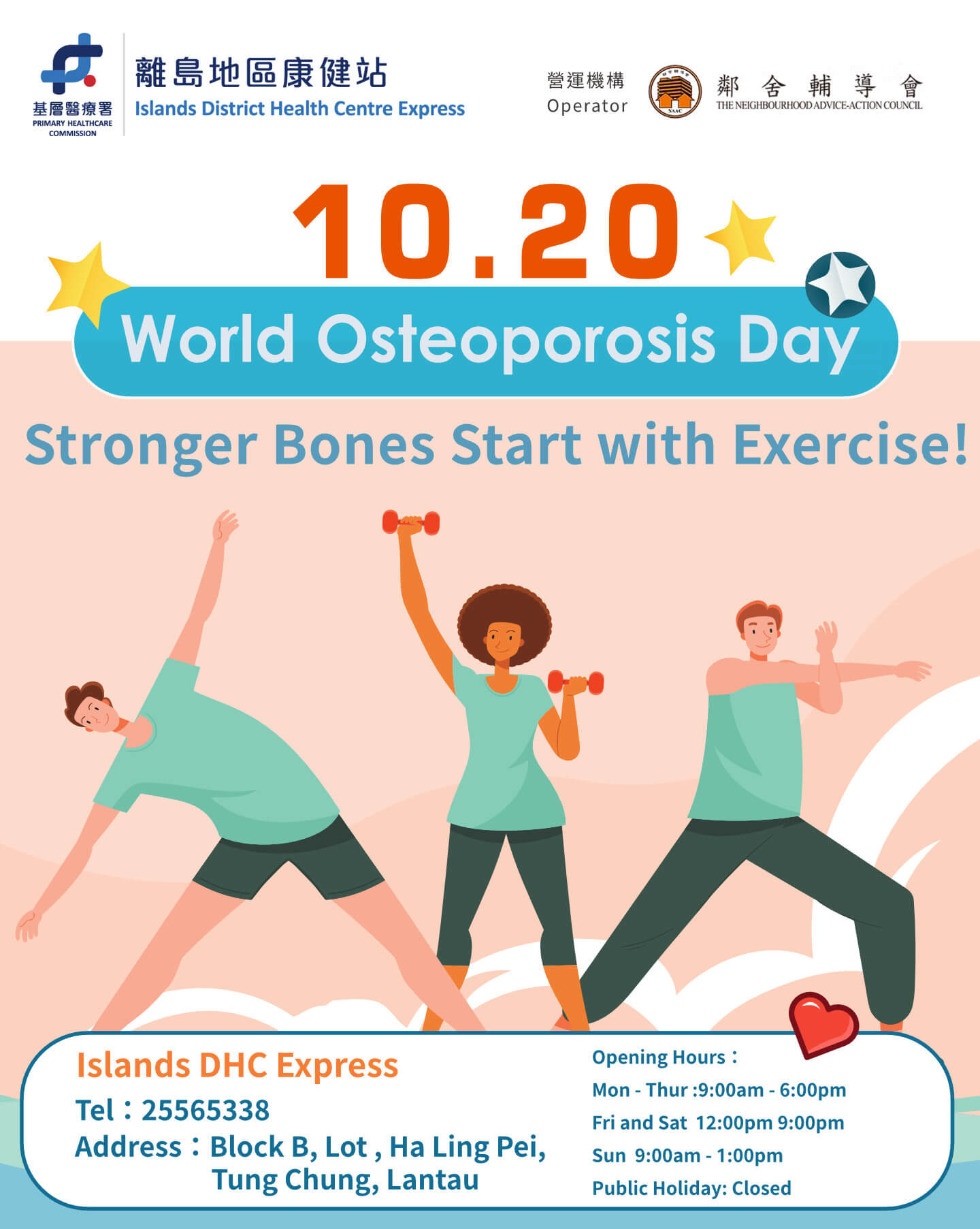
10.20 World Osteoporosis Day: Stronger Bones Start with Exercise!
Osteoporosis is a common chronic condition, particularly among older people and postmenopausal women. It causes a reduction in bone density, making bones more fragile and increasing the risk of fractures.
Many people with osteoporosis may worry about exercising: “Will exercise make me more likely to suffer a fracture?” In fact, appropriate exercise is an important part of maintaining bone and muscle health and reducing the risk of falls. Regular weight-bearing activity, resistance training and balance exercises can help maintain bone strength, improve muscle strength and balance, and reduce the risk of falls.
- Weight-Bearing Aerobic Exercise
How to do it: Try brisk walking, climbing stairs or social dancing.
Key point: Weight-bearing activities place mechanical load on the bones and can help maintain bone strength. Exercise regularly at an appropriate duration and intensity according to your physical condition and fracture risk.
- Resistance Training
How to do it: Use resistance bands, sandbags or light dumbbells to exercise major muscle groups.
Key point: Resistance training can help maintain or improve muscle strength and bone health.
- Balance and Fall-Prevention Training
How to do it: Practise standing on one leg; for safety, hold on to the back of a chair if necessary. You can also practise standing with one foot in front of the other.
Key point: Balance training can improve balance and coordination and help reduce fall risk.
Exercise Safely and Correctly
People with osteoporosis should:
Avoid excessive or repeated bending and twisting movement
Avoid high-impact movements
Seek medical advice if you have any uncertainty before exercising.
Reference:
Centre for Health Protection, Hong Kong
 📣 Calling all health-conscious individuals! Primary Healthcare Co-care Network Pop-up @ Fu Tung Plaza
 »