

• Skip to main content
  • Skip to header right navigation
  • Skip to after header navigation
  • Skip to site footer
islanddhc
鄰舍輔導會 The Neighbourhood Advice-Action Council

離島地區康健站 Islands DHC Express

  • Font Size
  • 繁
  • 简
Font Size |
  • 繁
  • 简
| Facebook Instagram
  • Home
  • About Us
  • Services
    • Service Scopes
    • Service Flow
    • Service Charge
    • Service Faq
  • Member
  • Health Programme
    • News
    • Featured Activities
    • Event Calendar
  • NSP
    • Network Service Provider List
    • Be a Network Service Provider
  • Health Info
  • Community Resources
    • List of Service Providers
  • Contact Us
  • Join Us
    • Recruitment
    • Volunteer

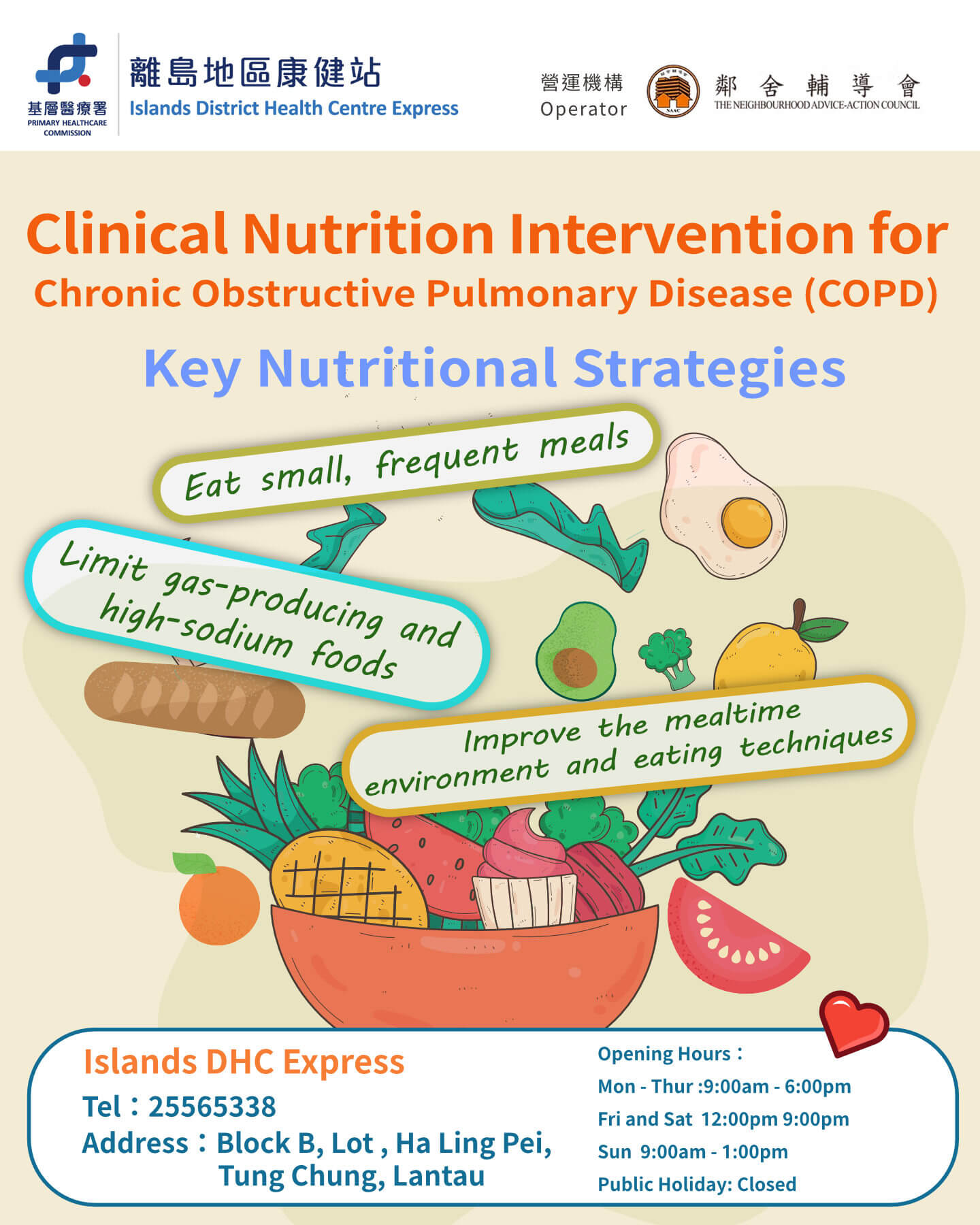
Clinical Nutrition Intervention for Chronic Obstructive Pulmonary Disease (COPD)

People with chronic obstructive pulmonary disease (COPD) often have an increased work of breathing due to airflow obstruction. As a result, their resting energy expenditure (REE) is often higher than that of healthy adults. At the same time, breathlessness, fatigue and reduced blood oxygen levels during meals may contribute to poor appetite. This combination of high energy expenditure and low dietary intake can readily lead to malnutrition and muscle wasting, particularly the loss of respiratory muscle mass. This may further accelerate the deterioration of lung function, creating a vicious cycle.
Active nutritional intervention for people with COPD is therefore an essential component of the overall treatment plan. To compensate for the additional energy expended through increased work of breathing, patients should consume sufficient calories. They should also aim for a daily intake of 1.2 to 1.5 grams of high-quality protein per kilogram of body weight to help prevent the loss and wasting of respiratory muscles.
In addition, carbohydrate metabolism produces more carbon dioxide and has a higher respiratory quotient (RQ), which may increase the ventilatory burden. In clinical practice, patients may therefore be advised to moderately increase the proportion of healthy fats in their diet while reducing their intake of refined carbohydrates.

Key Nutritional Strategies

1. Eat small, frequent meals
Divide the daily food intake into five to six smaller meals. This can help prevent excessive stomach distension from placing pressure on the diaphragm, thereby reducing breathlessness after meals.

2. Limit gas-producing and high-sodium foods
Avoid foods that are likely to cause abdominal bloating, such as beans, cruciferous vegetables and carbonated drinks, as bloating may restrict the movement of the diaphragm. Controlling sodium intake may also help reduce fluid retention and the risk of pulmonary oedema.

3. Improve the mealtime environment and eating techniques
Patients should rest adequately before meals and eat slowly, chewing each mouthful thoroughly. For patients with low blood oxygen levels, supplemental oxygen may be used during meals following assessment and advice from a doctor.
Appropriate nutritional support can significantly improve the clinical outcomes and quality of life of people with COPD. Patients are advised to undergo regular professional assessment by a registered dietitian, who can develop an individualised dietary prescription based on their nutritional status and clinical needs.

References:
National Institute for Health and Care Excellence, UK
American Lung Association. Nutrition and COPD.
Clinical Nutrition Intervention for Chronic Obstructive Pulmonary Disease (COPD)
Previous Post: « IDDSI Soft Meal Guidelines IDDSI Soft Meal Guidelines

Islands DHC ExpressThe Neighbourhood Advice-Action Council

Our Services

    1. Health Promotion Activities
    2. Health Assessment and chronic disease screening & treatment
    3. Disease management

Tel:2556 5338
Email:dhcx@naac.org.hk

About Us
Service Scopes
Service Flow
Service Charge
FAQs
Membership Eligibility
Latest News
Featured Activities

Event Calendar
Network Service Providers List
Be a Network Service Provider
Health Info
List of service organizations
Contact Us
Recruitment
Be a volunteer

                   
Home    Sitemap    Important Notices    Privacy Policy    Accessibility Statement
© 2026 All Rights Reserved
Last Update: 28 Sept 2026

Font Size

After adopting the adaptive web design, you can easily change the font size to suit your personal needs.

Hotkey

If you browse Islands DHC Express (“DHC”) website on a desktop computer, a modern web browser will allow you to hold down the Ctrl key
(Command key on a Macintosh) and press the + or – key to increase or decrease the text size, and 0 to go back to the default size.

On a smartphone or a tablet, you can simply pinch open on the screen to zoom in (i.e. to enlarge) and pinch close to zoom out (i.e. to reduce) everything.

Menu

You may also change the text size from the menu. Choose from the following web browsers for specific instructions:

    • Chrome
      On the Page menu, select Zoom, then Larger.
    • Firefox
      On the View menu, select Zoom, then Zoom In. Or you may click on the Menu icon and select + or – to make the text size bigger or smaller.
    • Internet Explorer / Edge
      On the View menu, select Text Size, then Largest.
      Or you may click on the IE Settings icon, select Zoom, then choose a percentage or click Zoom In.
    • Opera
      On the View menu, select Zoom. Then choose a percentage.
    • Safari
      On the View menu, select Make Text Bigger.

Font Size

After adopting the adaptive web design, you can easily change the font size to suit your personal needs.

Hotkey

When using smartphones and tablets, you can zoom in or out by simply sliding your finger on the screen.