



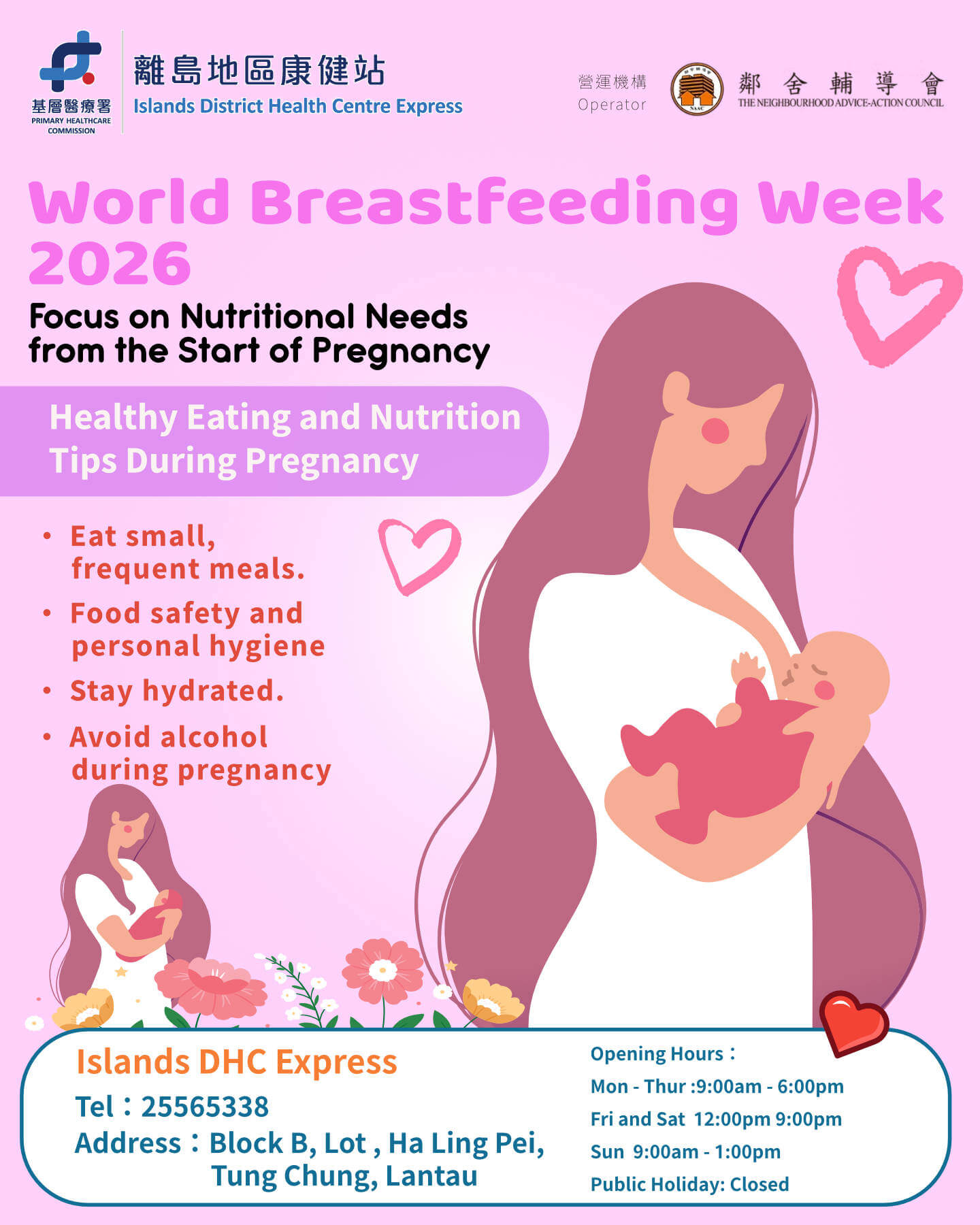
Centre Introduction: Focus on Nutritional Needs from the Start of Pregnancy
Pregnancy is a remarkable journey of nurturing new life. As the baby develops at different stages, the mother’s energy and nutrient needs also change. The key is to choose nutritious foods rather than simply eating more, so both mother and baby can stay healthy.
Nutritional Needs During Pregnancy
| Stage | Focus | Key points | Important nutrients | Food choices |
|---|---|---|---|---|
| 1st trimester of pregnancy (the first 13 weeks) | Early development | Demand for folate, vitamin A and iodine increases. Focus on food quality and balanced choices. | Folic acid (folate): helps prevent neural tube defects and anaemia. Iodine: supports thyroid function and the growth and brain development of the baby. Vitamin A: supports growth, immune function and visual development. | Dark green vegetables, legumes and beans, fruits, folate-fortified breakfast cereals, eggs, milk and seafood in appropriate amounts. |
| 2nd trimester of pregnancy (14th to 26th weeks) | Bone and blood development | Energy and protein requirements increase for the growing baby. Official guidance notes an extra 285 kcal/day in the second trimester if pre-pregnancy physical activity is maintained. | Calcium + vitamin D: calcium is essential for bones and teeth; vitamin D helps calcium absorption. Iron + protein: support increased needs and help prevent iron deficiency anaemia. | Milk and milk products, calcium-fortified soya milk, tofu, fish, poultry, eggs, lean meat, beans and nuts. |
| 3rd trimester of pregnancy (27th to 40th weeks) | Brain development and stamina | Energy and protein requirements continue to increase. Official guidance notes an extra 475 kcal/day in the third trimester if pre-pregnancy physical activity is maintained. | Omega-3 fatty acids, including DHA: support brain and visual development. Iron: supports the baby’s iron stores and helps prevent maternal anaemia. Dietary fibre: helps maintain bowel health and ease constipation. | Fish rich in omega-3 fatty acids but low in methylmercury, whole-grain foods, fruits, vegetables, beans and nuts. |
Healthy Eating and Nutrition Tips During Pregnancy
- Eat small, frequent meals. This may help ease nausea in early pregnancy and reduce discomfort from stomach pressure in later pregnancy.
- Pay attention to food safety and personal hygiene. Avoid high-risk foods associated with Listeria contamination, including cold cuts, raw or smoked seafood, unpasteurised milk and its products, and prepared and stored salads.
- Stay hydrated. Choose water regularly and eat a variety of vegetables, fruits and whole-grain foods to support bowel health.
- Avoid alcohol during pregnancy. Pregnant women and lactating women should avoid excessive intake of caffeine; even when choosing coffee or milk tea with less caffeine, pay attention to the drinking amount.
- Choose more fish that are rich in omega-3 fatty acids but low in methylmercury. Avoid large predatory fish such as shark, swordfish, sailfish, golden eye and tuna, particularly bigeye and bluefin.
- Take supplements as advised by healthcare professionals, including a prenatal multiple micronutrient supplement containing at least 150 micrograms iodine, and at least 400 micrograms folic acid during the first trimester of pregnancy.
World Breastfeeding Week 2026
World Breastfeeding Week is celebrated annually from 1 to 7 August. The 2026 theme is “Breastfeeding for a Sustainable Start in Life: Strengthen What Works”. The World Health Organization recommends exclusive breastfeeding for the first 6 months of life, followed by continued breastfeeding alongside appropriate complementary foods for up to 2 years or beyond.
Islands DHC Express
Enquiries: 2556 5338
Core Centre Address: Block B, Lot 2536, Ha Ling Pei, Tung Chung, Lantau (next to Tung Chung Fort)
Website: islanddhc.org.hk
Opening Hours: Mon–Thu 9:00 AM–6:00 PM | Fri–Sat 12:00 PM–9:00 PM | Sun 9:00 AM–1:00 PM | Closed on public holidays
Reference Sources
- Department of Health, Family Health Service — Healthy Eating During Pregnancy and Breastfeeding: https://www.fhs.gov.hk/english/health_info/woman/20036.html
- Department of Health, Family Health Service — 10 Key points for Healthy Eating During Pregnancy and Breastfeeding: https://www.fhs.gov.hk/english/health_info/woman/30016.html
- Centre for Food Safety — Pregnant Women: https://www.cfs.gov.hk/english/consumer_zone/susceptible_population/pregnant_women.html
- Department of Health, Family Health Service — World Breastfeeding Week 2026: https://www.fhs.gov.hk/wbw2026/
 The Ultimate Protein & Nutrition Workshop for Modern Man
 »
»